Cook from the main methods. Melbourne’s advantage is range. In many suburbs you can buy gai lan, bitter melon, tofu skins, chili-bean paste and a whole snapper without treating it as a project. That range is also how home cooks buy eight pastes and cook none of them well. Shop for one region. Cook two plates.
This page is the produce note for the wider city — east, south-east, inner markets — not a second Chinatown walk. For apartment timing after a tram, use the CBD recipe note. For streets, use the Melbourne hub.
What to buy in this city
Port Phillip seafood, Victorian mushrooms, winter greens and summer stone fruit all show up in Chinese kitchens here. A fishmonger who will scale a whole snapper is the start of the steamed ginger fish method. If they will not look at you when you ask when it landed, buy greens.
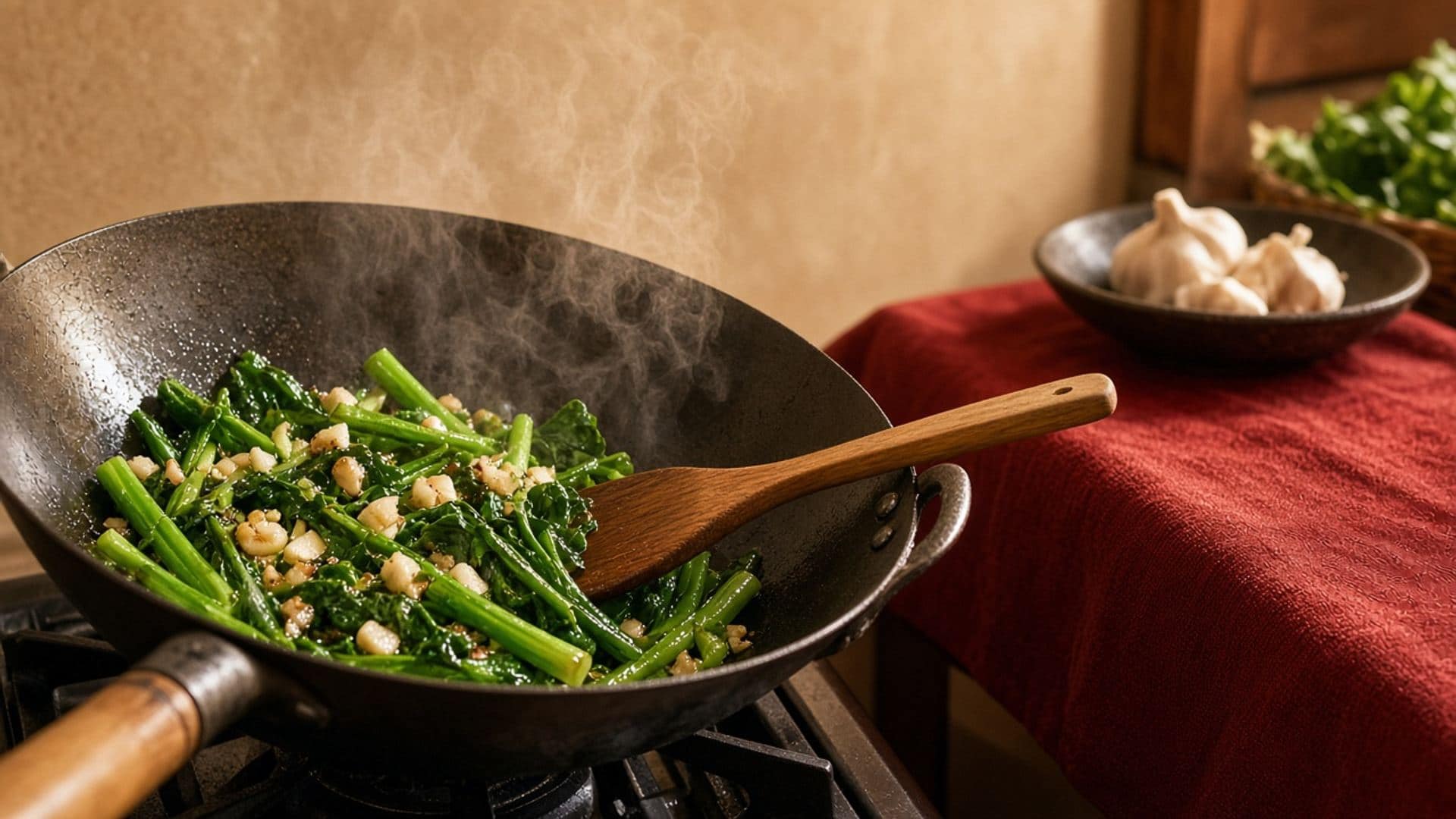
Garlic gai lan is the weeknight green that tells you whether your burner can work. Melbourne gai lan is often excellent from a suburban grocer on the Whitehorse or Springvale corridors. Cook it the day you buy it. A Sunday shop in the east can set up two weeknights if you stay inside one pantry.
Tomato and egg uses the same tomatoes the market sells to everyone else. It is not a lesser Chinese plate. Smashed cucumber wants a firm cucumber from the same shop. Weeknight fried rice wants last night’s pot, which means you cook plain rice on purpose the night before.
Mapo-style tofu is the reason to buy chili-bean paste. It is not the reason to put that paste in the steamed fish. A Sunday in the east that buys both is fine. A Sunday that uses both in one pan is how a clear idea becomes a brown one.
The dim sim is a Melbourne snack memory. It is not a method on this hub and it is not a failed har gow. If you want dumpling work, that is a different craft. These six recipes stay weeknight-shaped.
A pantry you can actually finish
Light soy, dark soy, black vinegar, Shaoxing, white pepper, starch, sesame oil, ginger, garlic, spring onion. Chili-bean paste when you mean Sichuan. That is enough. Suburban grocers in the east and south-east will sell you far more. Buy more only when you have cooked the short list twice.
Queen Victoria Market, suburban Asian grocers, and a decent supermarket will all cover the basics. Do not treat a particular stall as permanent. The city hub names precincts, not tenants.
One region per night. Cantonese-leaning steam and snap for the fish and the green. Sichuan for the tofu night. Shanghainese sweetness is a different shopping list. The regional essay is the difference in writing.
Heat in a Melbourne kitchen
Winter greens and tofu come off a cold fridge into a kitchen that may still be warming. Rest them. Summer humidity is milder than Brisbane’s but leftover rice still wants a tray. Home burners are weaker than a restaurant pit in Richmond or Box Hill. Smaller batches. A wide pan if the wok is decorative.
If you cook after a late train, you are closer to the CBD note: one pan, tomato-and-egg, a green if you still have attention. If you cook after a Saturday shop in the east, you can set up the fish for Sunday lunch and the tofu for Monday.
Sequence
- Honest snapper or similar: steam, cucumber, plain rice.
- Excellent greens, ordinary fish: gai lan and tomato-and-egg.
- Chili-bean paste already open: mapo-style tofu and rice, no sweet-sour.
- Leftover rice and a weeknight: fried rice and a green.
If the guest list is a restaurant list, read the banquet guide and book a Melbourne room. Four people is two recipes plus rice. A Sunday family table that needs a lazy Susan is not a home wok problem.
Return to the city hub for precincts. Shop once. Cook twice. Stay in one region.
Mushrooms, two weeknights, and the east
Autumn mushrooms from a suburban grocer can go into the mapo-style tofu if you want more texture, or into a simple hot toss with garlic if you are staying Cantonese-leaning. Do not put them in the steamed fish. A Sunday shop that covers greens, tofu, eggs and rice sets Monday and Wednesday without another trip.
Preston, the Whitehorse corridor and the south-east all sell the short list. Pick one shop and learn its fish days. A different suburb every week is how you never know when the snapper is good. The main methods do not change when the suburb does. The produce does.