Cook from the main methods. Geelong is a regional shop plus a bay. A fish that tastes like Corio Bay is the point of cooking here at all. A specialist run to Melbourne is optional, not a prerequisite, and it is a bad reason to delay Tuesday dinner.
This note is for a home wok after a city-centre or suburban grocer, not after a fantasy pantry. If you drove down for the water, cook what the counter has. If you live here, keep the short list on the shelf so you are not hostage to a weekend trip.
Bay first, then the green
Mussels, squid and a whole white fish show up when the boats and the shops agree. Smell them. If the flesh is bright, use the steamed ginger fish method and stop there — ginger, spring onion, light soy, hot oil. Do not add a sweet glaze because a coastal visitor menu trained you to. The port is an advantage only on the days the counter is honest.
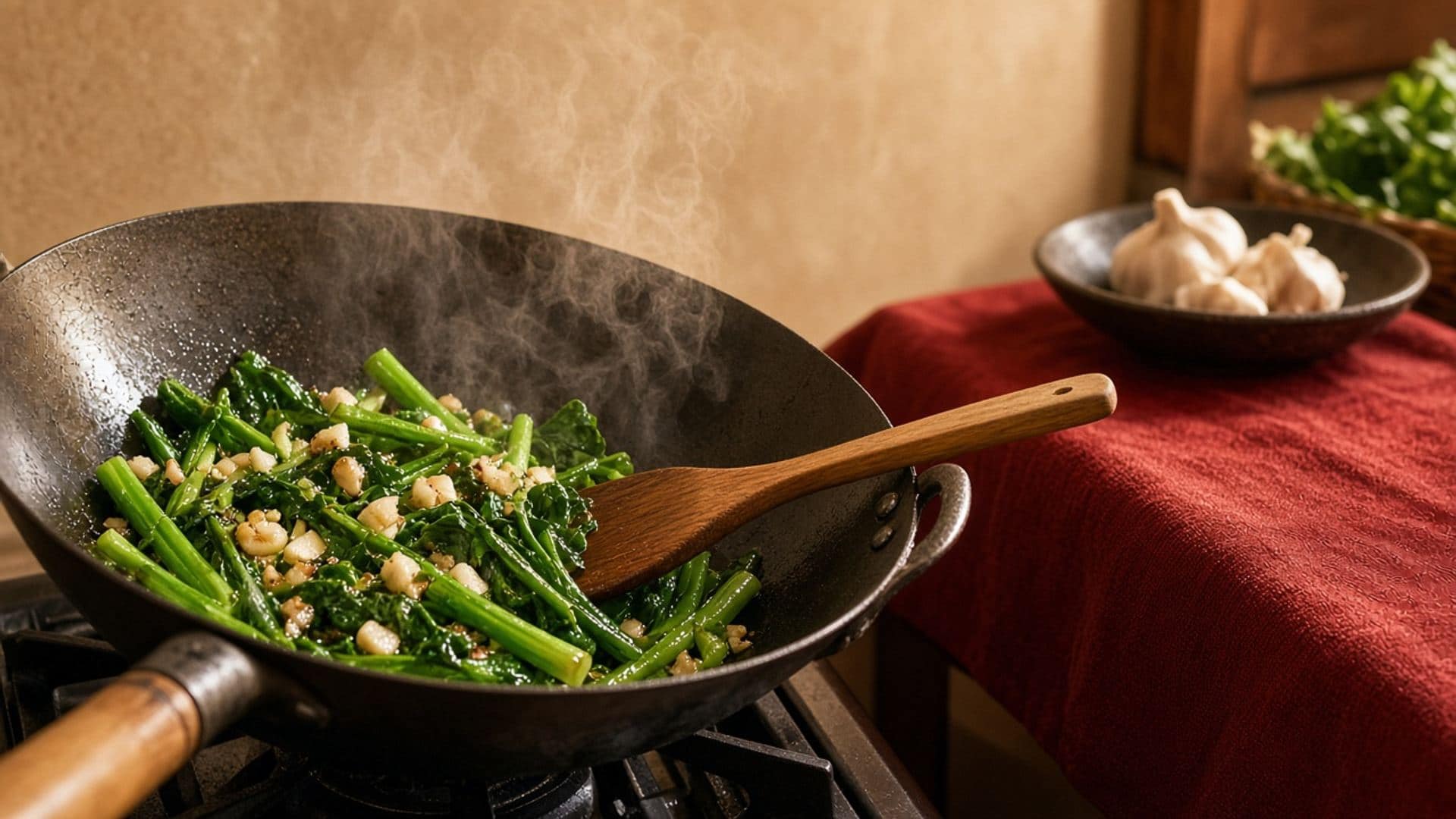
If the fish is ordinary, buy Victorian greens. Garlic gai lan after a regional shop is a complete dinner with rice. Cold-climate stems need a short meeting with boiling water before the wok, or they stay tough while the leaf overcooks.
Smashed cucumber is the right cold plate when the wind is up and you do not want another hot pan. Tomato and egg is the midweek fallback when you did not make it to a fishmonger. Both are correct Geelong dinners. Neither is a failed banquet.
Do not wait for Melbourne to cook
The freeway is not a pantry. Chili-bean paste, tofu and a decent soy exist in this city. Buy them when you see them and cook mapo-style tofu on a weeknight. Drive to Melbourne when you want a Chinatown walk or a regional specialist dinner, not when you need spring onions.
Keep the short list: light soy, dark soy, black vinegar, Shaoxing, white pepper, starch, sesame oil, ginger, garlic, spring onion. The Geelong hub will tell you which streets to try. It will not name a tenant as if the lease were permanent.
One region per night still holds. If you steam a bay fish, keep the rest Cantonese-leaning. If you open chili-bean paste, do not also make a sweet-sour. The regional essay is the map; this page is the shop.
Wind, winter, and a domestic ring
A bay wind will change whether you want to stand over a smoking wok with the window open. It should not change the fish test. In winter, preheat the pan longer. Take tofu off the fridge. Weeknight fried rice wants yesterday’s pot spread on a tray; a regional kitchen that only cooks on Sunday still needs Tuesday leftovers planned on Saturday.
Home burners are weaker than a restaurant pit. Smaller batches. A wide pan if the wok is a wall decoration. If you scorch the garlic, throw it away and start the aromatics again.
Sequence
- Honest bay fish: steam, cucumber, plain rice.
- Greens better than the fish: gai lan and tomato-and-egg.
- You already have tofu and paste: mapo-style tofu, rice, nothing sweet.
- Four people at home: two of the methods above, not a copied banquet sequence.
If the guest list is the extended family from the western district, stop shopping and book a room. Read the banquet guide. Pretty is not the test. Pacing and a whole fish are the test, and those are restaurant crafts at that scale.
Return to the city hub when you want streets. Cook after a regional shop. The bay is an ingredient, not a view to cook at.
Mussels, squid, and knowing when to stop
If you buy mussels, cook them the day you buy them, in a little ginger and Shaoxing, and do not treat them as a second centrepiece beside a whole fish. One seafood idea per night. Squid wants a hot pan and a short time; a timid pan makes it rubber. Neither of those plates is on the six-method hub as a full write-up, so keep them simple or skip them and steam the fish you can time.
A western-district weekend guest list is still two home recipes plus rice, or a booked room. Do not scale tomato-and-egg into a banquet by multiplying the pan. Heat dies when the batch grows. The banquet guide exists so you stop at the right craft.
A bay wind that keeps you off the waterfront is a reason to cook indoors, not a reason to skip the fish test at the counter that morning. Buy, or do not buy. Then go home.